FEATURE
Meet the Attorney Standing Between You and a Broken Election
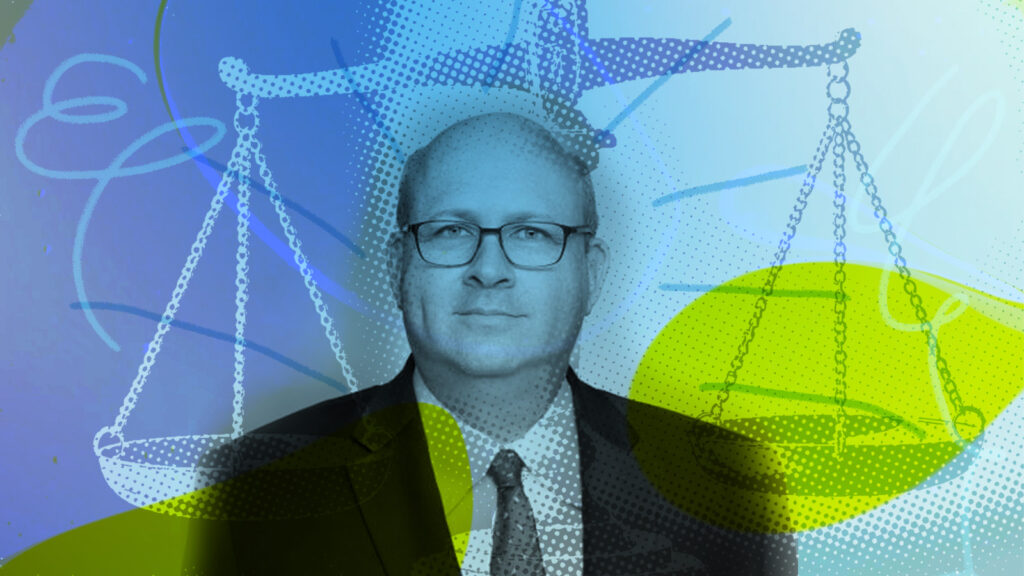

How one unassuming lawyer’s work on election law shapes the voting rights of millions.
By Eve R. Doster
To corporate media, voting rights attorney Marc Elias is a talking head they roll out for five-minute, commercial‑bookended news segments. But to the rest of America, he’s a godsend more than a pundit—even if many of us don’t know it yet.
Six years ago, Elias oversaw (and won) all 64 Democratic legal challenges to the Trump 2020 campaign’s election fraud claims. After proving how fragile election law could be in court, he built Democracy Docket, a free online platform dedicated to tracking voter suppression efforts in the United States.
“To the rest of America, he’s a godsend more than a pundit—even if many of us don’t know it yet.”
But unlike many Americans conditioned to react to the politics of American democracy, Elias’s work has taught him to stay laser focused on structural realities.
As a litigator he’s done history‑changing work protecting mail‑in voting rights, blocking unethical redistricting, and safeguarding future elections. And while his courtroom victories are far‑reaching, his work with Democracy Docket is nearly as consequential, building a national infrastructure for tracking voter suppression before it becomes irreversible.
According to The New York Times, the 57-year-old has “arguably done more than any single person outside government to shape the rules under which campaigns and elections are conducted.”
Yet few people even know his name.
Through Democracy Docket, Elias streamlines the sprawling subject of voting rights into digestible insights. The site provides real‑time tracking of legal cases, offers plain‑language explainers, and reports on election‑subversion efforts long before most news outlets ever get to them (if they even do).
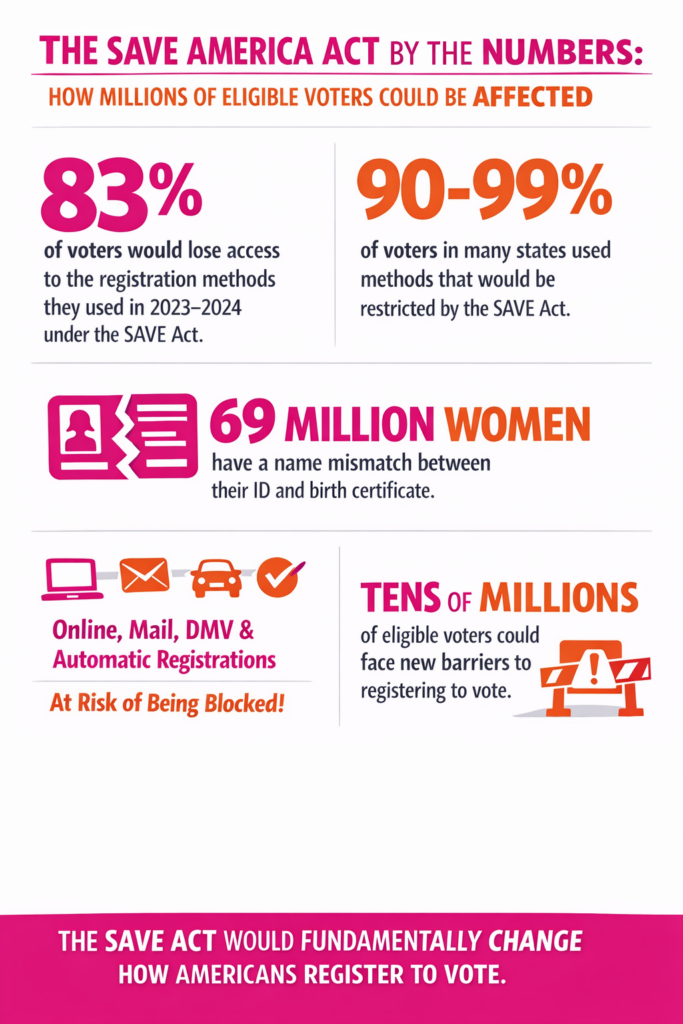
In his recent blog There are no two sides to a confession, Elias takes aim at the SAVE Act, a federal bill that would require voters to show documentary proof of U.S. citizenship—effectively eliminating most online, mail‑in, and third‑party voter registration methods.
“Patriotism isn’t flags and jingoism. It’s the quiet work of keeping self‑government functional.”
He wrote, “The Republican Party is telling us…it intends to make it harder for its opponents to vote and easier to control the outcome of elections.” He added, “There are no two sides to a confession. I have given up on legacy media taking it seriously.”
Appropriately, Elias calls out both sides when needed. To wit: If one listens to conservative news, they’ve been told that voter fraud is rampant and that droves of undocumented immigrants are voting in elections. If one listens to liberal news, they’ve been denied deep dives, because producers worry that voting rights segments bore audiences.
Both approaches are reckless because once access to the ballot becomes a partisan weapon, the foundation of democracy starts to wobble. Not for one party. For everyone. Elias is trying to stop the wobble before it devolves into a collapse.
And here’s what matters most: protecting voting rights is one of the few truly nonpartisan acts left in American life. Elias, while a Democrat, understands that history is full of examples where the systems built to suppress one group were later turned on another. Elias demonstrates that patriotism isn’t just flags and jingoism. It’s the quiet, unglamorous work of keeping self‑government functional.
Democracy Docket is in many ways a nationwide early warning system. It warns of small erosions before they become landslides. And it does so without caring who you voted for.
Elias isn’t protecting Democrats with his website—he’s protecting voters. He’s protecting the idea that the government should reflect the will of the people, not the will of whichever faction manages to manipulate the rules most effectively. He defends the legitimacy of elections, even when his preferred candidates lose.
“Once access to the ballot becomes a partisan weapon, the foundation of democracy starts to wobble.”
And so, in a country where political identity has become a brutalizing game of ‘red team vs. blue team,’ Elias is doing something deeply unfashionable: he’s defending the playing field itself.
Elias recently posted, “I want to warn you and I want there to be a record.” And maybe that’s why so few people know his name–because he’s the guy who prevents disasters. When he wins, nothing dramatic happens. No headlines, no memes, no rancor. Just Americans quietly casting ballots the way they’re supposed to.
Marc Elias isn’t defending a party; he’s defending democracy itself. It’s the fight that makes every other fight possible. And whether you love Marc Elias, dislike him, or had never heard his name before today, the truth is simple: if you believe your vote should count, this overlooked protector is on your side.
TIMELINE
Marc Elias’s Legal Wins — Defending Democracy Every Step of the Way
2020
Democracy Docket
- Democracy Docket launched
- Defeated Trump election lawsuits
2021
Voting Rights Victories
- Voting rights victories
- Redistricting battles
2022
Ballot Drop Box Wins
- Ballot drop box wins
- Fight against voter suppression
2025
Stopping the SAVE Act
- Stopping the SAVE Act
- Opposing proof of citizenship
2026
& Beyond
- Battleground state cases
- Safeguarding future elections
- Protecting voter access
- Defending voting rights
THE ANATOMY OF A FAIR ELECTION
Protecting Your Vote Every Step of the Way
Tracking & Challenging Voter Suppression & Election Litigation
Voter Registration
- Online & Mail-In Access
- Registration Protection
Voting & Ballots
- Safe & Secure Voting
- Ballot Access Defense
Vote Counting
- Monitoring & Audits
- Stopping Disinfo
Certification
- Legal Oversight
- Ensuring Results
Democracy Docket — Legal Challenges
Voter Rights